
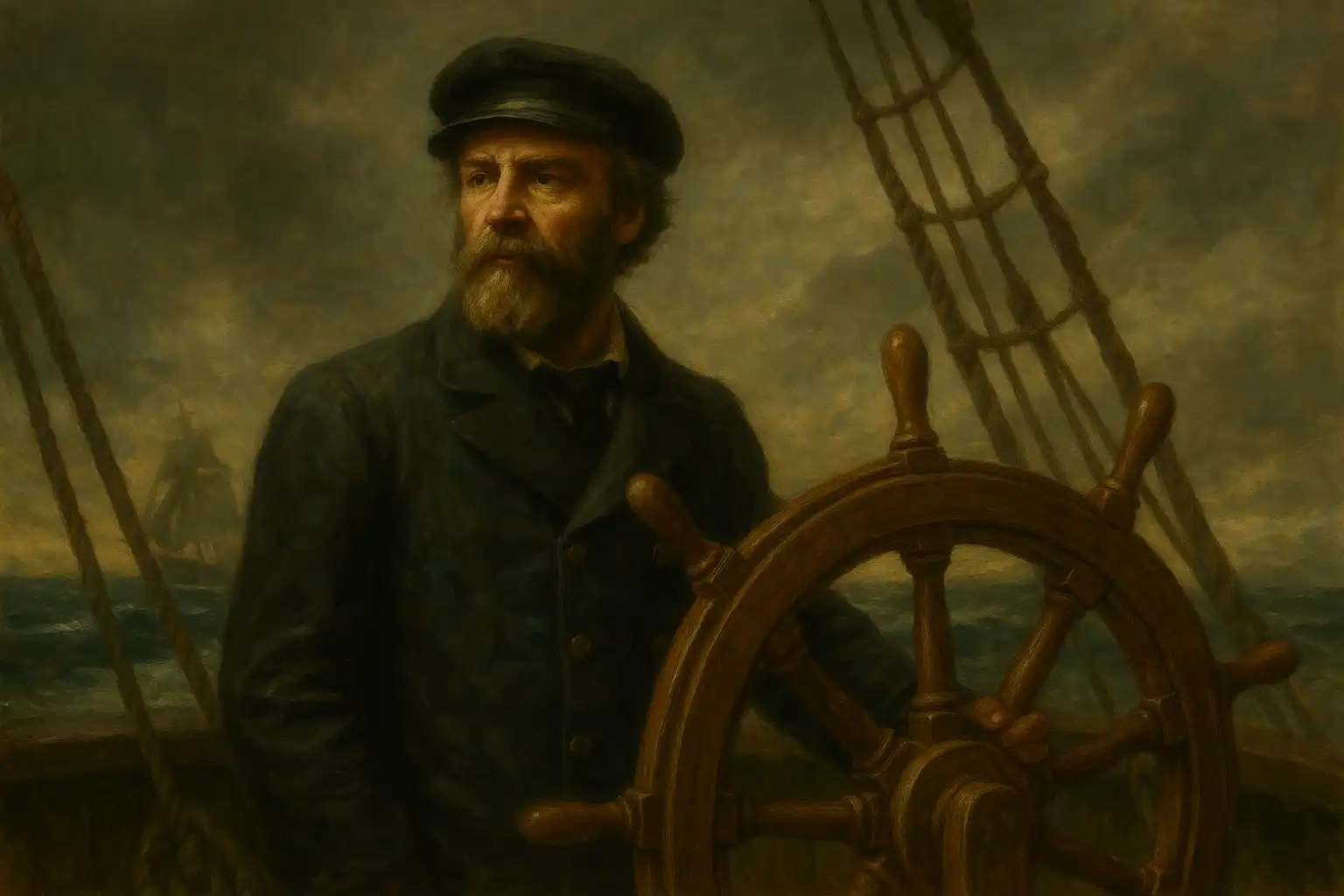
“O Captain! My Captain!” is probably Walt Whitman’s most famous poem, which is kind of ironic because it barely sounds like him. If you know Whitman from Leaves of Grass, you’re used to sprawling free verse and these massive catalogs of images. This poem? It’s tight, structured, and actually rhymes. He wrote it in 1865 right after Lincoln’s assassination, and honestly, you can feel the grief in every line. The whole thing captures this weird mix of relief and devastation. The Civil War was finally over, the country survived, but Lincoln didn’t make it to see the victory. That tension between triumph and tragedy is what makes the poem hit so hard, even now.
The poem became Whitman’s most popular work pretty much immediately, which kind of bothered him later because he knew it wasn’t representative of his usual style. But there’s a reason it connected with people. Everyone from students to presidents has quoted it, and it shows up everywhere from classrooms to movies like Dead Poets Society. More than 150 years later, it still captures that gut punch feeling of losing a leader right when you need them most.
Table of Contents:
Full Poem Text
First published in 1865 in Sequel to Drum-Taps. This poem is in the public domain in the United States.
O Captain! My Captain!
by Walt Whitman
O Captain! my Captain! our fearful trip is done,
The ship has weather’d every rack, the prize we sought is won,
The port is near, the bells I hear, the people all exulting,
While follow eyes the steady keel, the vessel grim and daring;
But O heart! heart! heart!
O the bleeding drops of red,
Where on the deck my Captain lies,
Fallen cold and dead.
O Captain! my Captain! rise up and hear the bells;
Rise up—for you the flag is flung—for you the bugle trills,
For you bouquets and ribbon’d wreaths—for you the shores a-crowding,
For you they call, the swaying mass, their eager faces turning;
Here Captain! dear father!
This arm beneath your head!
It is some dream that on the deck,
You’ve fallen cold and dead.
My Captain does not answer, his lips are pale and still,
My father does not feel my arm, he has no pulse nor will,
The ship is anchor’d safe and sound, its voyage closed and done,
From fearful trip the victor ship comes in with object won;
Exult O shores, and ring O bells!
But I with mournful tread,
Walk the deck my Captain lies,
Fallen cold and dead.
Summary and Meaning
The poem opens with the speaker announcing that the “fearful trip” is over and the “prize” has been won. The ship (representing the United States) has made it through every storm (the Civil War), and now the port is in sight with bells ringing and people celebrating. But there’s an immediate gut-punch: the captain (Lincoln) is lying dead on the deck, bleeding. The contrast between the celebration on shore and the death on deck sets up the whole poem.
Second stanza gets more desperate. The speaker’s begging the captain to get up and see all the celebration happening for him. Flags, bugles, flowers, crowds, all this joy and recognition. He calls Lincoln “dear father,” which shows how personal this feels. But it’s useless. The speaker tries to convince himself it’s just a dream, but Lincoln’s really dead.
Final stanza accepts reality. The ship’s safely anchored, the voyage is complete, the goal has been achieved. The shores are celebrating, bells are ringing. But the speaker can’t join in. He’s walking the deck with “mournful tread” where his captain lies dead. That final repeated line, “Fallen cold and dead,” hammers home the finality of it all.
So what’s it really about? On the surface, it’s a sailor mourning his captain. In reality, it’s Whitman processing Lincoln’s assassination and the bizarre emotional state of the country at that moment. Victory and devastation happening simultaneously. The extended metaphor is pretty straightforward: ship equals country, fearful trip equals Civil War, captain equals Lincoln, safe harbor equals Union preserved. The poem captures that historical paradox where the nation achieved its goal but lost the person most responsible for getting there.
Themes and Analysis
Victory and Loss Side by Side
The central tension here is how celebration and grief can exist in the same moment. The war’s over, the Union’s saved, people are partying on the shore. But Lincoln’s dead. The speaker can’t reconcile these two realities. Everyone else gets to be happy, but he’s stuck with this corpse on the deck. This reflects what actually happened in 1865. The country was relieved and devastated at once. Whitman captures that weird psychological state where you should feel victorious but everything feels hollow instead.
Leadership as Sacrifice
Whitman frames Lincoln as more than just president. He’s the captain who guided the ship through the storm, the father figure who protected everyone. That repeated “O Captain! my Captain!” isn’t just respect; it’s almost worship. And calling him “dear father” makes it deeply personal. The poem suggests that real leadership requires everything, even your life. Lincoln didn’t just win the war; he died for it, in a sense. The victory came at the ultimate cost.
Individual Grief vs. Collective Celebration
There’s this gap between what the masses feel and what the speaker feels. Everyone on shore is celebrating. The speaker can’t. He’s isolated in his grief, unable to join the party. This speaks to how loss affects people differently. National victory doesn’t erase personal mourning. The poem shows how someone can be surrounded by joy but completely unable to access it because of what they’ve lost.
The Formal Structure as Mourning
Here’s where the poem gets interesting technically. Whitman was famous for breaking all the poetry rules—no rhyme, no meter, just rolling free verse. But for Lincoln, he goes completely traditional. Regular rhyme scheme, steady meter, repeated refrains. Why? It gives the poem a ceremonial, hymn-like quality. It sounds like something you’d recite at a funeral or memorial. The structure itself is an act of mourning, a way of showing respect through formality. That repeated “Fallen cold and dead” works like a church bell tolling, marking each stanza with finality.
The Cost of Achievement
Underneath everything is this question: was it worth it? The ship made it home, the prize was won. But at what cost? The poem doesn’t answer that directly, but it forces you to sit with the question. Victory without the victor. Success that feels like failure. The goal achieved but the person who achieved it gone. That’s a pretty dark meditation on what accomplishment actually means.
Structure and Form
This poem is weird for Whitman because it’s so structured. He built a reputation on free verse and breaking rules. Here he does the opposite: three stanzas, eight lines each, with consistent rhyme and meter. It’s like he put himself in a straitjacket on purpose.
The rhyme scheme is AABB CDEFE, creating this steady, march-like rhythm. Those indented lines are where the emotional weight hits hardest. “O heart! heart! heart!” breaks the rhythm intentionally, like the speaker can’t control himself. Then “Fallen cold and dead” creates this slow, heavy landing at the end of each stanza.
Repetition does heavy lifting here. “O Captain! my Captain!” appears multiple times. “Fallen cold and dead” ends every stanza. This creates ritual, like repeating prayers at a funeral. It emphasizes the unchanging reality: Lincoln is dead, and that doesn’t shift.
The three-stanza structure mirrors an emotional journey. First: shock. Second: denial and desperate pleading. Third: acceptance but also resignation. It’s like the stages of grief compressed into 24 lines.
Historical and Literary Context
Whitman wrote this in spring 1865, right after Lincoln was shot at Ford’s Theatre on April 14. The war had just ended days earlier. So the country was celebrating the end of the bloodiest conflict in American history while simultaneously processing the president’s murder. Whitman had seen Lincoln around Washington and admired him, though they’d never met.
The poem first appeared in Sequel to Drum-Taps, a collection Whitman rushed to publish. It became popular immediately, which both pleased and annoyed him. He was glad people connected with it, but he knew this wasn’t his most representative work.
At the time, Whitman’s usual style was controversial. Leaves of Grass scandalized people with its free verse and lack of traditional form. So when “O Captain! My Captain!” came out with conventional rhyme and meter, people loved it. It was accessible in a way most Whitman wasn’t. The poem that made him famous was the one that least sounded like him.
The 1989 film Dead Poets Society cemented its place in pop culture when Robin Williams’ character uses it. Literary critics have mixed feelings. Some appreciate its emotional directness, others argue it’s sentimental. But popular audiences have never cared about that debate.
Significance and Impact
This poem captured a nation’s grief at a specific moment and made it feel universal. Lincoln’s assassination was traumatic in a way that’s hard to overstate. The war had just ended, people thought the worst was over, then the president gets shot. Whitman gave people language for that experience.
The poem also bridged the gap between experimental poetry and mass appeal. Whitman’s usual work was too weird for most people, but this reached everyone. It proved experimental poets could write accessible work when they chose to, which helped legitimize his entire career.
From a craft perspective, it shows how form enhances meaning. Whitman’s choice to use traditional structure wasn’t compromise; it was deliberate. The formal structure gives it gravity and memorability. Free verse poets aren’t just breaking rules because they can’t follow them.
The poem influenced how Americans think about political leadership and sacrifice. It helped cement Lincoln’s mythic status and created a lasting metaphor for leaders who don’t live to see their work fulfilled. That tension between victory and loss, between collective celebration and personal grief, never stops being relevant. That’s why it still gets taught and quoted.
Famous Lines and Quotes
“O Captain! my Captain! our fearful trip is done,” opens the poem with this desperate, almost crying repetition. The exclamation points emphasize the emotional intensity right from the start.
“The ship has weather’d every rack, the prize we sought is won,” establishes the extended metaphor clearly. The ship surviving “every rack” (torture device, but also nautical term for strain) represents the Union enduring the war.
“But O heart! heart! heart! O the bleeding drops of red,” breaks the poem’s steady rhythm with this gasping, almost panicked repetition. The shift from celebration to blood is jarring on purpose.
“Here Captain! dear father! This arm beneath your head!” calling Lincoln “dear father” elevates him from political leader to family. It’s intimate and heartbreaking.
“It is some dream that on the deck, You’ve fallen cold and dead,” captures that disbelief that comes with sudden death. The speaker knows the truth but can’t fully accept it yet.
“Exult O shores, and ring O bells! But I with mournful tread,” the contrast between the celebrating crowds and the lonely mourner sums up the entire poem. Everyone else is happy; the speaker is destroyed.
“Fallen cold and dead” repeated at the end of every stanza works like a refrain or a tolling bell. By the third time, it feels inevitable and final.
Conclusion
“O Captain! My Captain!” works because it refuses to let victory be simple. The war’s over, the Union’s saved, but Lincoln’s dead. Whitman won’t let you celebrate without also mourning. He won’t let you mourn without acknowledging that something was accomplished. That emotional complexity is what gives the poem its lasting power. It’s not just about Lincoln or the Civil War. It’s about how life gives you triumph and tragedy in the same moment and expects you to hold both somehow.
What makes it especially effective is Whitman’s choice to abandon his usual style. He knew what this poem needed: clarity, accessibility, and formal gravity. By using traditional rhyme and meter, he created something that could be memorized, recited, and shared across the entire country. It became a collective expression of grief in a way his free verse never could have. That’s not selling out; that’s artistic intelligence.
The poem’s ending doesn’t offer comfort or resolution. The captain stays dead. The speaker stays sad. The crowd keeps celebrating on shore while he walks the deck alone. Life goes on, but not for everyone, and not in the same way. That honest refusal to wrap things up neatly is what keeps the poem from feeling sentimental. It hurts, and Whitman lets it hurt.
Frequently Asked Questions About O Captain! My Captain! by Walt Whitman
What is “O Captain! My Captain!” really about?
On the surface, it’s a sailor mourning his captain after completing a dangerous voyage. In reality, Whitman’s writing about Abraham Lincoln right after his assassination in April 1865. The “fearful trip” is the Civil War, the “ship” is the United States, and the dead captain is Lincoln. The poem captures the bizarre national mood at that moment: relief that the war was over mixed with devastation over Lincoln’s murder. So while crowds were celebrating Union victory, Whitman focuses on the unbearable cost of that victory.
Why doesn’t this poem sound like Whitman’s other work?
Most of Whitman’s poetry flows in free verse with no rhyme, no regular meter, just these long rolling lines. Here he uses traditional rhyme, steady meter, and repeated refrains. It almost sounds like a hymn or funeral march. He made that choice deliberately because he wanted something formal and ceremonial, something people could recite together at memorials. His usual free verse style was too experimental and personal for this moment. The nation needed shared language for collective grief, so he gave them something accessible.
Why did it become so well known?
Simply put, people could understand it. The metaphor is clear, the emotion is direct, and the structure is memorable. You didn’t need to be a poetry expert to connect with it. That made it perfect for classrooms, public readings, and memorials. Over time it became the default poem people turned to when they needed to express national mourning or talk about leadership and sacrifice. Its endurance in American culture, from the 1860s through Dead Poets Society and beyond, shows how a poem written for one specific moment can take on universal meaning.
What does the ship symbolize?
The ship represents the United States during the Civil War. The “fearful trip” is the four years of brutal conflict. The storms and “every rack” the ship weathered are the battles, losses, and near-destruction of the Union. The “prize” they sought is the preservation of the country as one nation. The safe harbor is the war’s end and Union victory. It’s a pretty straightforward extended metaphor. Whitman isn’t being subtle about it, which is part of why the poem was so accessible to 1865 readers who’d just lived through that war.
Who is the speaker in the poem?
The speaker seems to be a sailor or crew member who served under the captain. But more broadly, the speaker represents any American who admired Lincoln and felt personally devastated by his death. By calling Lincoln “dear father,” Whitman frames the relationship as both professional and deeply personal. The speaker could be Whitman himself, or it could be the voice of the nation. That ambiguity lets readers project their own grief onto the poem. It’s both individual mourning and collective loss.
When was O Captain! My Captain! written?
Whitman wrote it in spring 1865, immediately after Lincoln’s assassination on April 14. It was published later that year in Sequel to Drum-Taps, a collection of Civil War poems. The speed of composition shows. The poem has an immediacy and rawness that comes from writing in the moment of grief rather than reflecting on it years later. Whitman was still processing the shock when he wrote this, and you can feel that in the desperate repetitions and the unresolved ending.
What is the tone of the poem?
The tone shifts between stanzas but overall it’s grief-stricken and reverential. First stanza is shock mixed with denial. Second stanza is desperate pleading, almost begging Lincoln to wake up. Third stanza is resigned acceptance but not peace. Throughout, there’s this deep respect for Lincoln, treating him not just as a president but as a father figure. The formal structure gives it a ceremonial quality, like a funeral oration. But underneath the formality is raw pain. That combination of public ceremony and private anguish is what gives the poem its emotional power.
Explore More Whitman
If you enjoyed our analysis, keep exploring Whitman’s works with the following articles: